Save All The Things

This post is a straightforward and shameless endorsement for the Camscanner app. Not all tools are made for everyone. I wouldn’t recommend the tools I use to everyone. But this is different. I can find no reason that any scholar should avoid Camscanner. It’s amazingly easy to use, it has […]


Spreadsheets for Historians

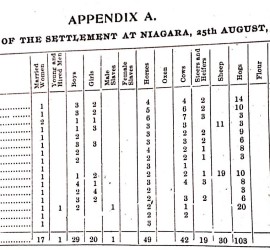
Historians’ Spreadsheet Many scholars, even historians, use spreadsheets for tasks such as grading or accounting. Some might use programs such as Microsoft’s Excel Spreadsheets, while others use Google Spreadsheets or even Open Office. Regardless of which program we use, spreadsheets are powerful tools that allow us to collect and query […]


That Doesn’t Count 2

Today, on the final day of Rebuilding the Portfolio: Digital Humanities for Art Historians, we are discussing scholarly communication. I think it’s the most important topic we’ve covered. One of our guest instructors is Joan Fragaszy Troyano, who opened the day with a discussion of communication in art history. When […]


What Can Digital Humanities Do?

In his chapter for Debates in the Digital Humanities, Matthew K. Gold asks the following questions Can DH provide meaningful opportunities to scholars seeking alternatives to tenure-track faculty employment? Can it save the humanities? The university? That got me wondering: what are people saying that DH can do? The answers […]


Making Risky Moves 1

On the second night of DHSI 2014, as I sat with a colleague discussing my intended dissertation topic, I said something outrageous: “I want to produce a dissertation that cannot be printed out to produce a coherent and linear document.” For some time, I’ve entertained the idea that my final […]


The Closest Reading? 1

Just before the holidays, I agreed to a short-term contract for a set number of hours to complete a specific task. Then the term ended and holiday travels began. My car broke down, winter storms arrived, and the contract was pushed to the back burner. But then I found out […]


Reading Series: Part 5, History in the Digital Age 2

The year is 1959, and as a graduate student in history, I’m currently studying the approaches that are emerging from the Annales School in France. My doctoral supervisor is familiar with the topic and uses similar approaches in her own work. As we discuss the themes and recent publications, she […]


Reading Series: Part 4, Historical Mapping

Think about your hometown, that peculiar and unique arrangement of open spaces, thoroughfares, domiciles, and workplaces. In an older town, streets might twist and contort in defiance of regular angles, remnants of an age in which transportation was defined by hooves and wooden spokes. I grew up in a Victorian […]


Reading Series: Part 3, Changing Narratives/Values in History 2

Upon completing my latest readings about the changing theories of history, I began to imagine how I could create a visualization in the place of my usual response article. I was inspired by David Staley’s argument that historians should open their scholarship to the possibilities afforded by visual representation. Staley […]


Reading Series: Part 2, Theorizing History Software

Imagine that you are standing on the edge of a field; to your left and right, the treeline extends beyond your sight. You have come to the field because you know that it contains information or a story or an experience that you desire, but no signpost directs you.